Directing
French Scene Breakdown
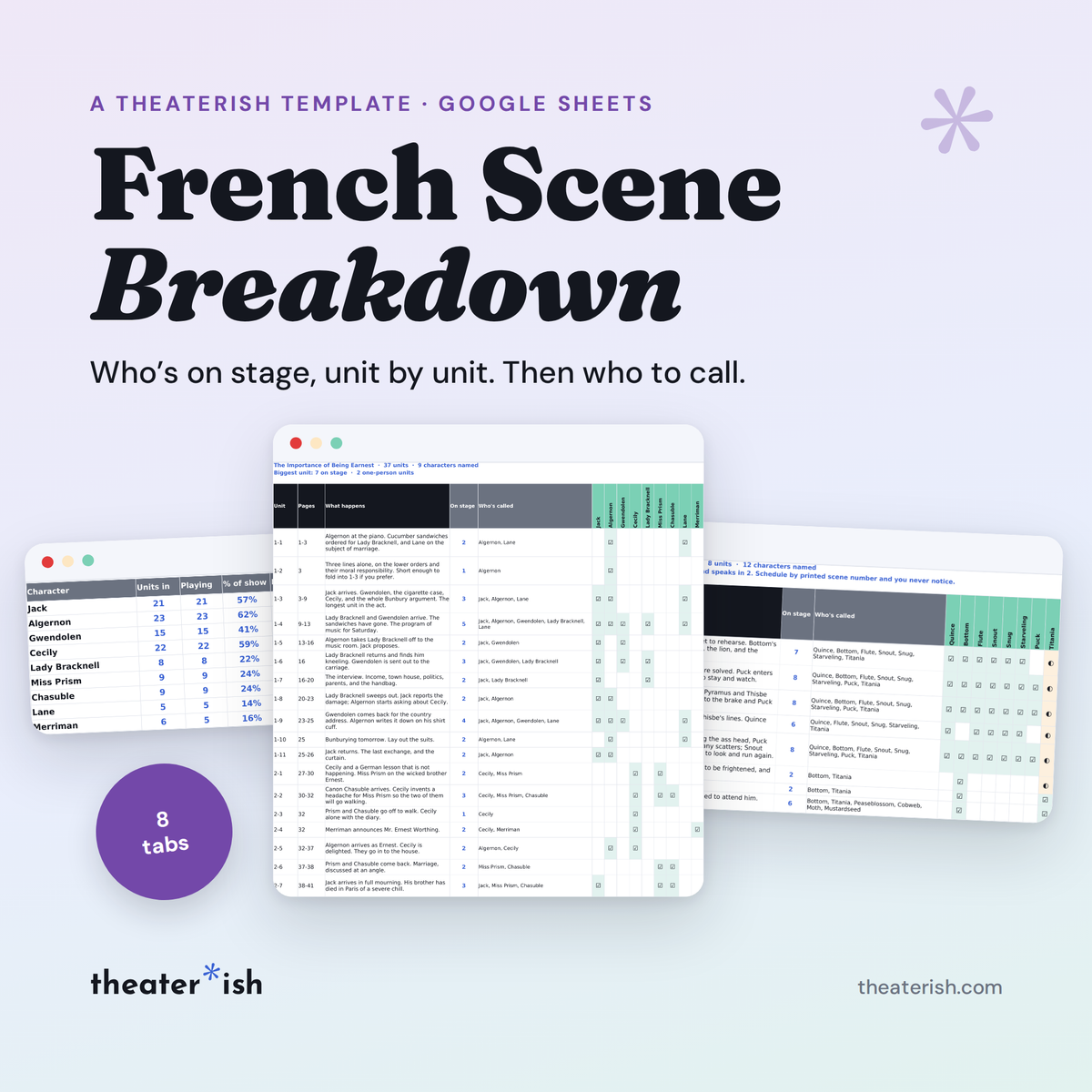
Break a script into units by who's on stage. Tick the grid and it writes your call list, rolls up every actor, and finds the gaps.
What's inside
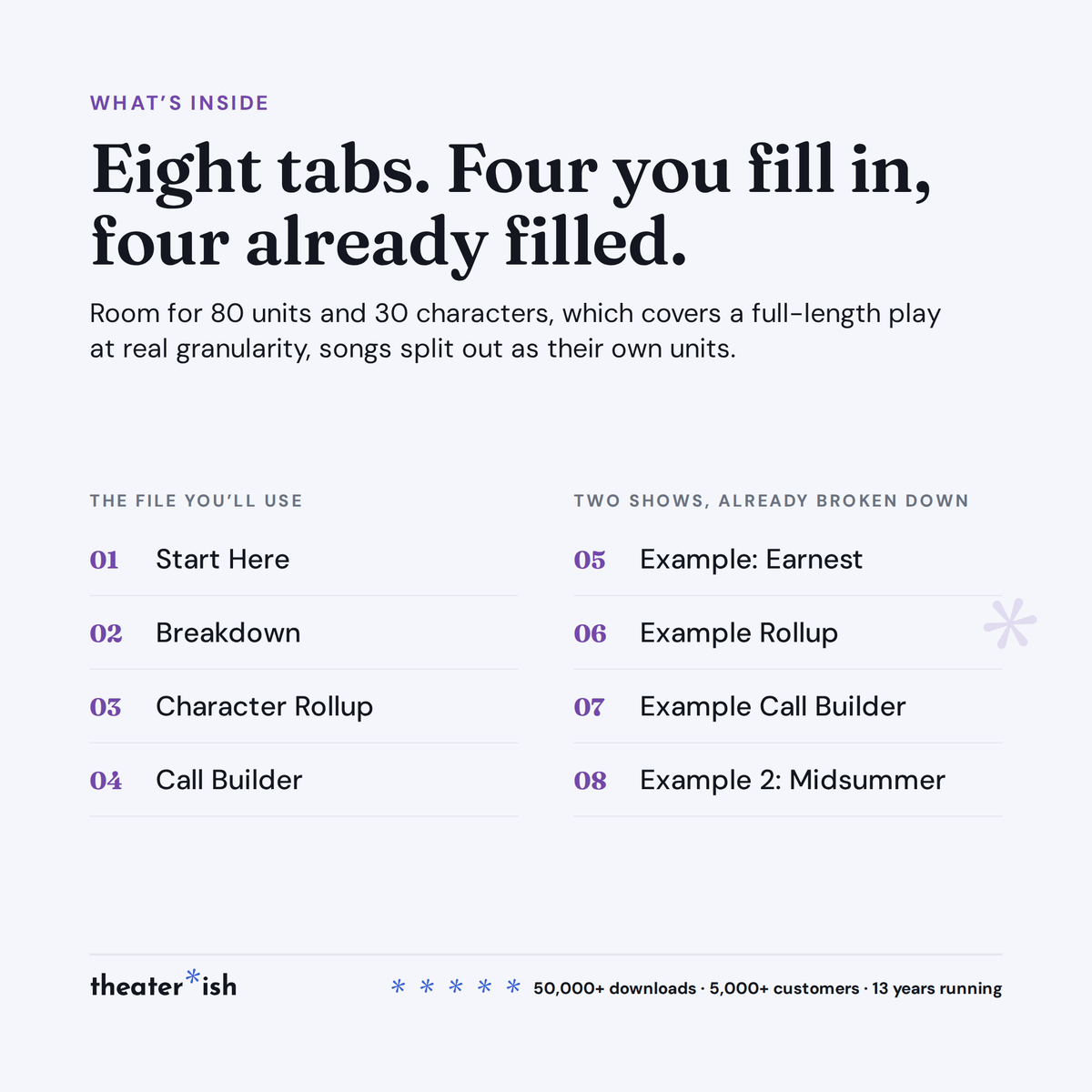
- Blank breakdown — 80 units, 30 characters
- Call list written as plain text
- Character rollup — units, percentage, first and last
- Gap finder for costume changes and early releases
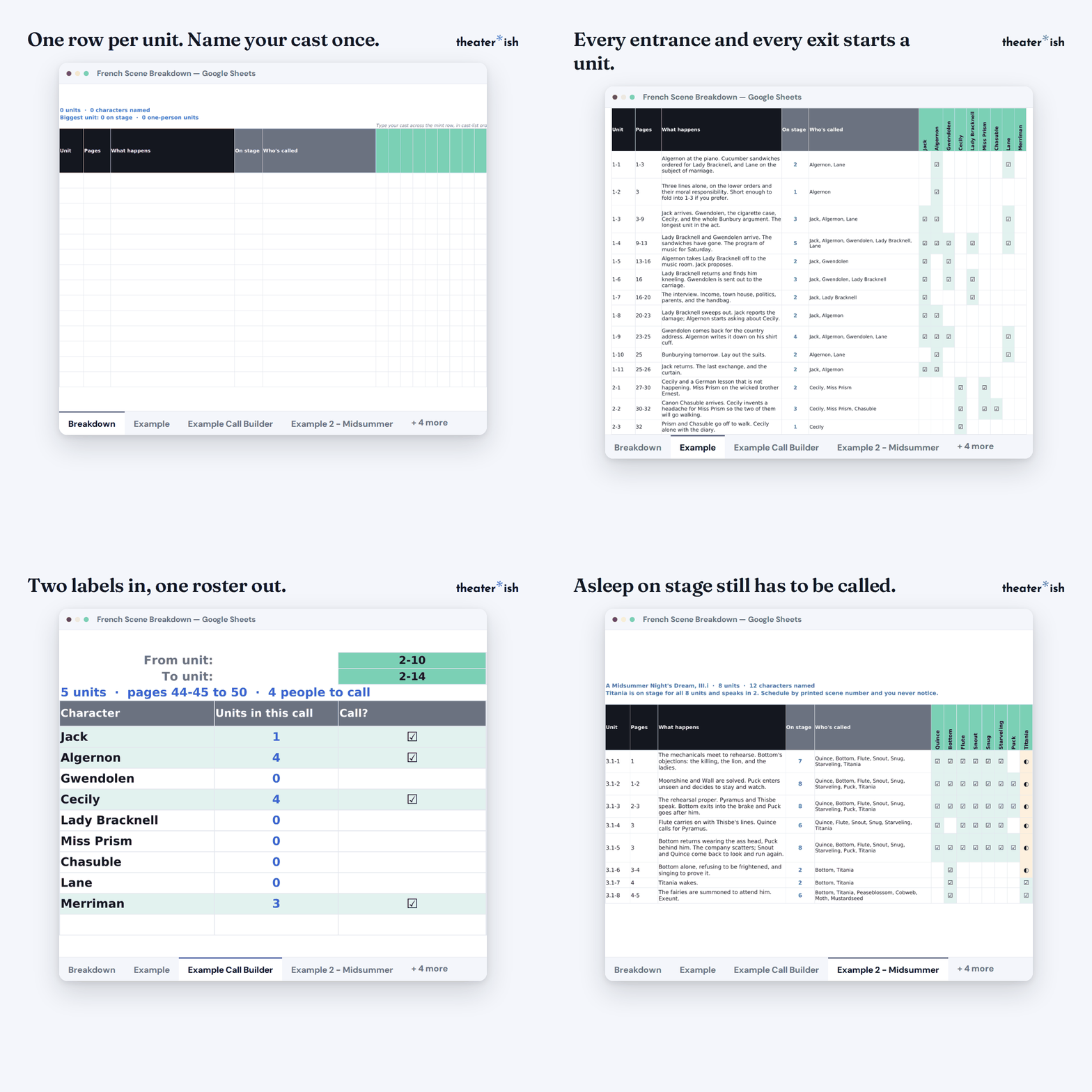
- Call builder — roster, page span, head count
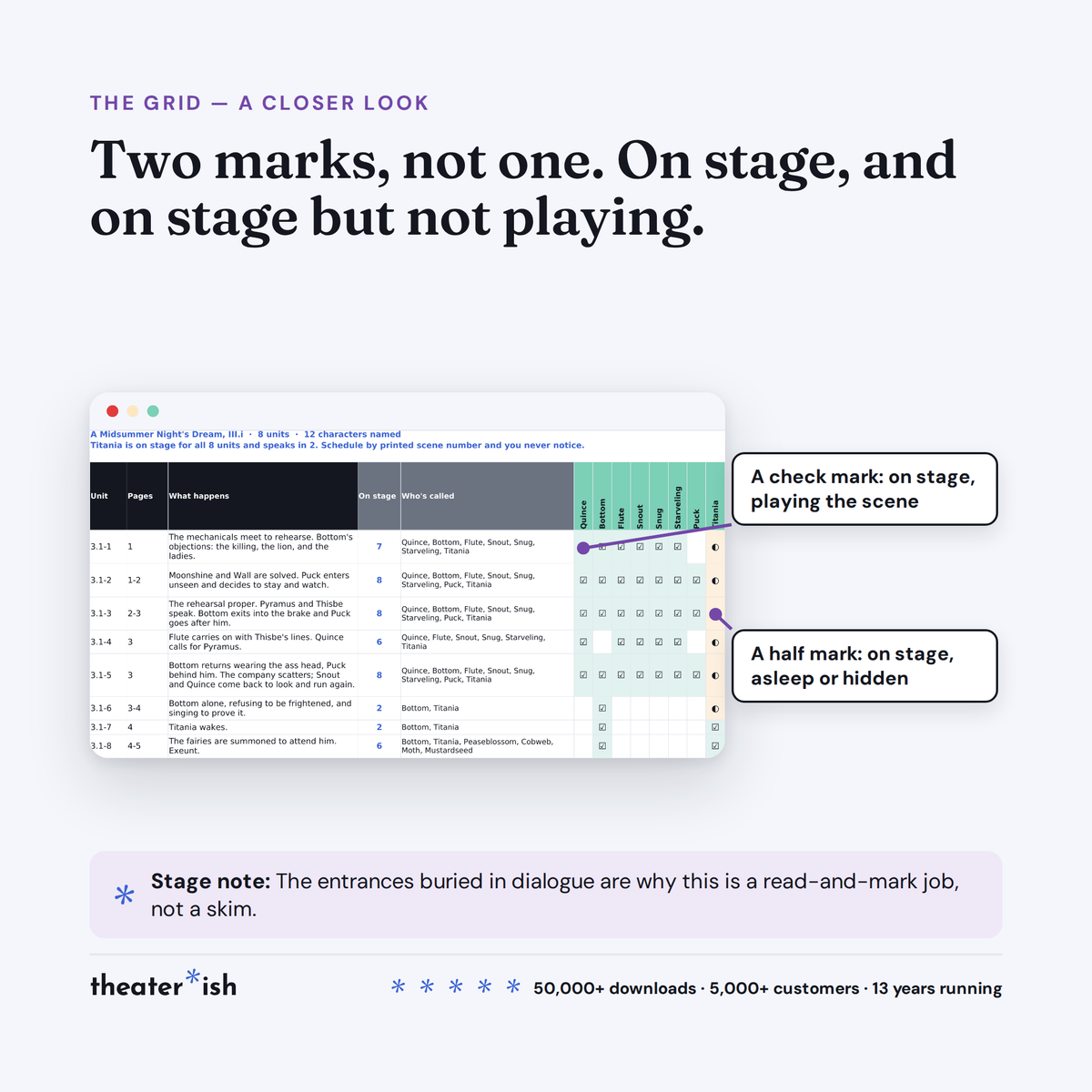
- On-stage-but-not-playing second mark
- Two filled examples, both public domain
- Walkthrough document
About this product
A French scene is a unit of a play defined by who is on stage. Every entrance and every exit starts a new one. Break a script down that way and you stop calling thirty people to rehearse a scene for two.
This is where that breakdown lives, and it does the counting.
At a glance
- Format
- Google Sheets · Google Docs
- Category
- Directing
- Access
- Lifetime · fresh copies anytime
- Delivery
- Instant download
- Best for
- Scheduling rehearsals
What it does that a blank spreadsheet doesn't
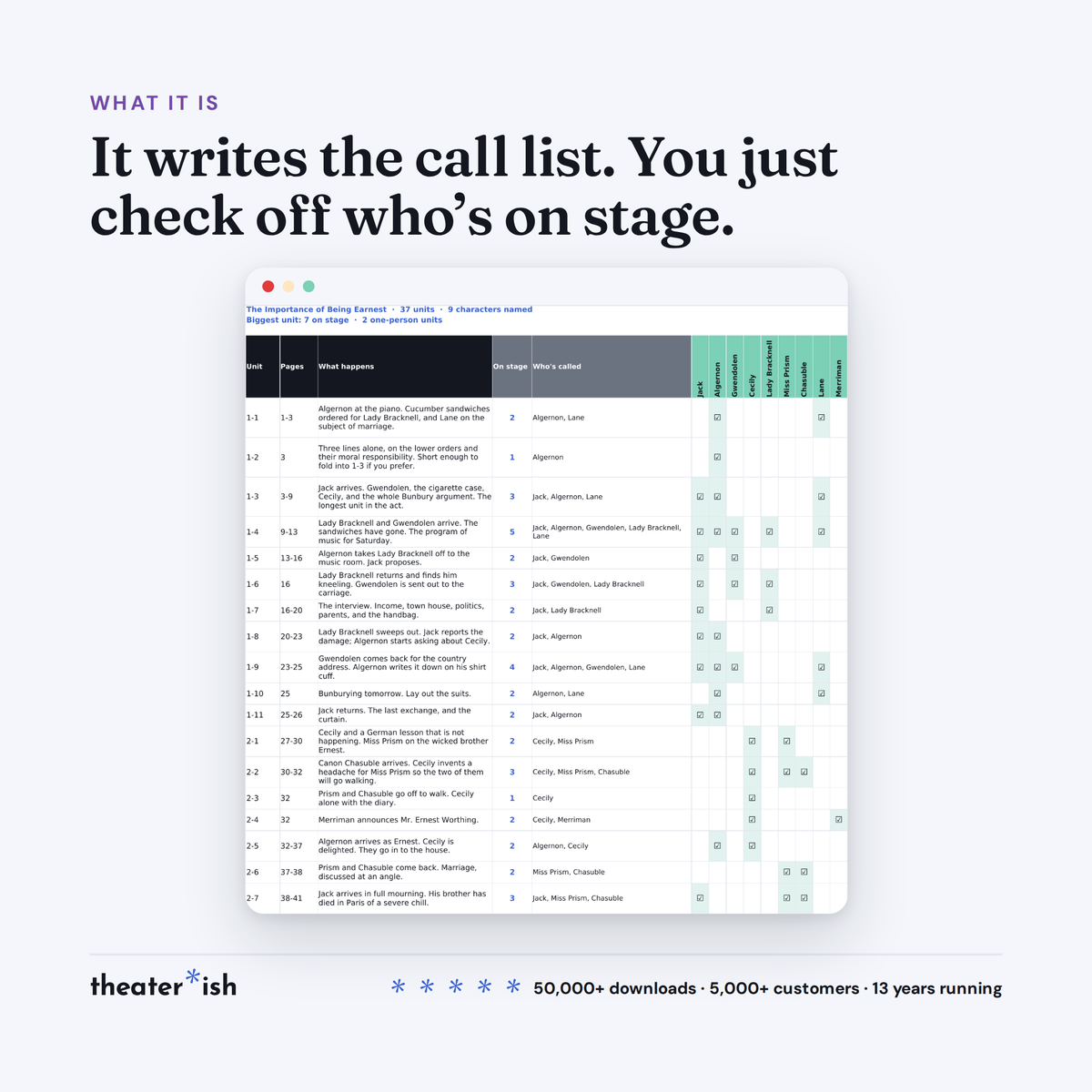
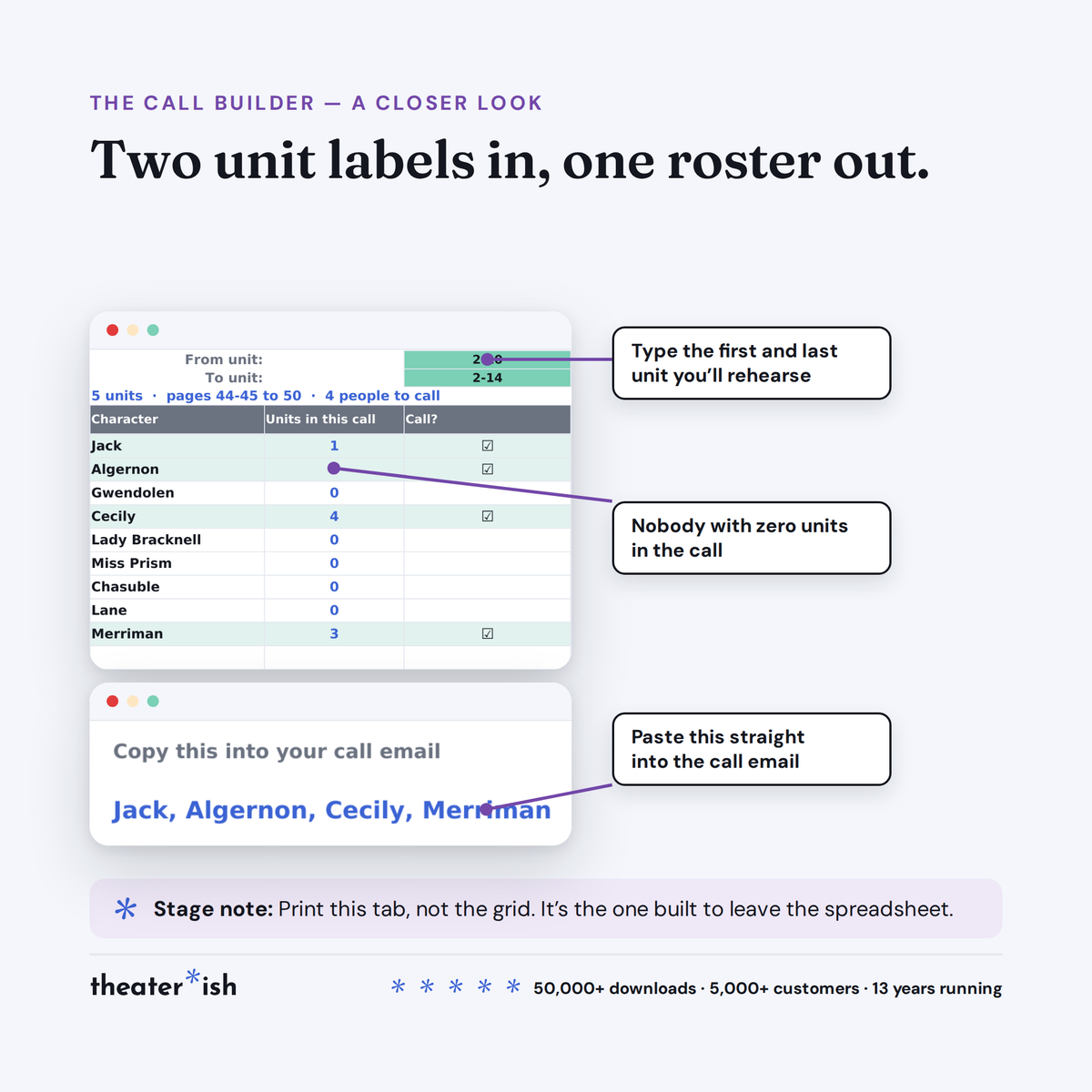
- Writes the call list. Check off who's on stage in each unit and the sheet returns the names as plain text — the comma-separated line that goes straight into the call email.
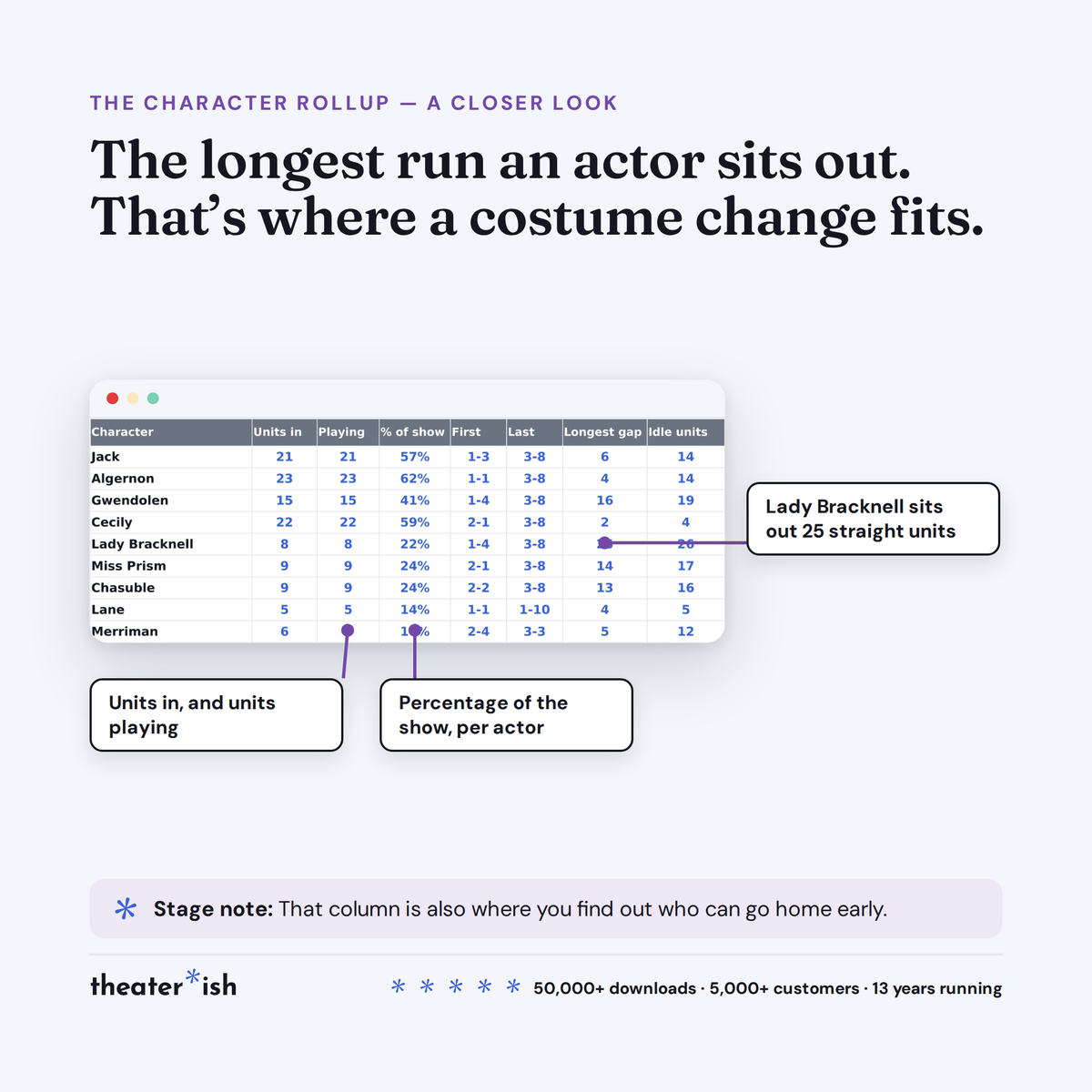
- Rolls up every actor. Units in, units playing, percentage of the show, first and last appearance.
- Finds the gaps. The longest run of units each actor sits out between their first entrance and their last exit. That's where a costume change fits, and where somebody can go home early.
- Builds the call. Type the first and last unit you plan to rehearse. It returns the roster, the page span, and the head count.
- Counts the sleeping bodies. A second mark for anyone on stage but not playing the scene — asleep, hidden, preset, standing in a tableau. Still an actor you have to call.
It comes filled in
Two examples, so you can print either script and mark it up freely. The Importance of Being Earnest broken down whole — three acts, 37 units, nine characters. And Act III scene i of A Midsummer Night's Dream, the harder case: ensemble traffic, an interrupted rehearsal, and Titania asleep on stage for six of its eight units.
The blank ships with a Start Here tab, and the walkthrough covers how to mark a script on paper and where the judgment calls are.
New to breaking a script into units? What is a French scene, and why it should run your rehearsal schedule walks the method with both of these scripts.
Common questions
Questions, answered.
Do I need Microsoft Office or Adobe to use these templates?
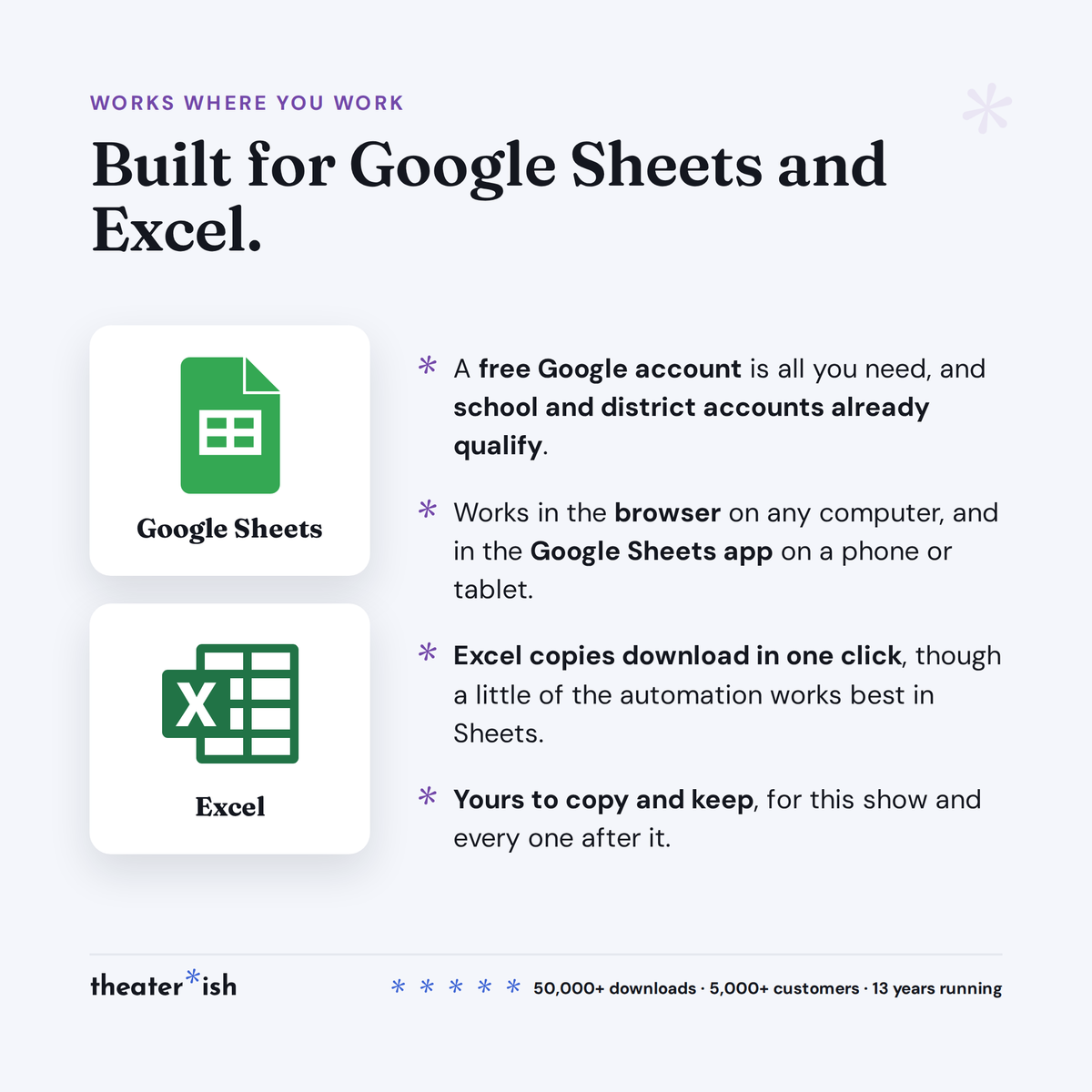
No. Theaterish templates are built in free tools — Google Sheets, Google Docs, and Canva. You don't need a paid Microsoft Office or Adobe subscription. You'll need a free Google account, and a free Canva account for Canva templates.
Is this a one-time purchase or a subscription?
It's a one-time purchase. You pay once and the templates are yours to keep and reuse for every show, season after season.
Can I reuse the templates for more than one production?
Yes. Every template is built to be reused — duplicate your copy for each new show and start fresh, as many times as you like.
How are the templates delivered?
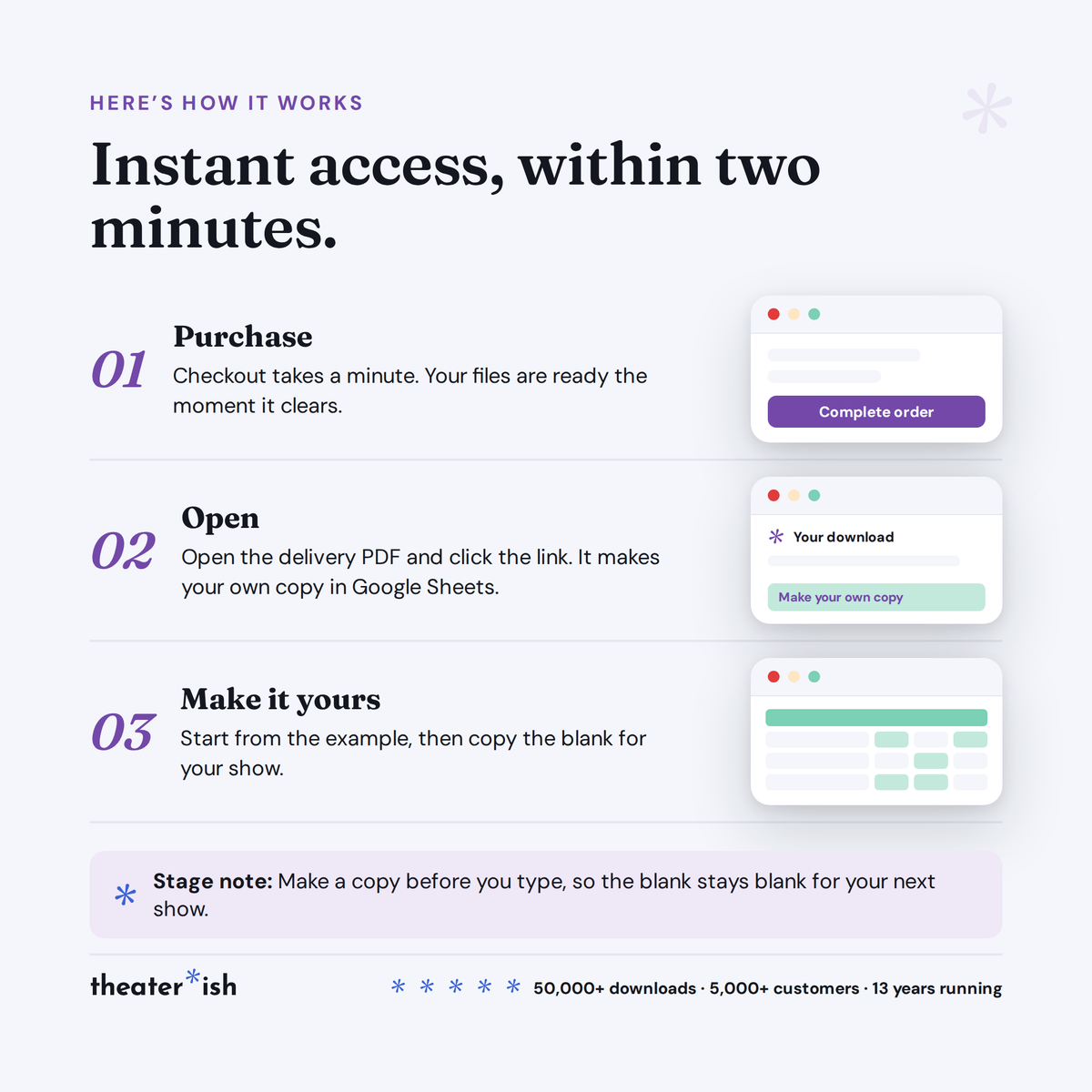
Everything is digital. After checkout you'll receive access instantly — you copy each template into your own Google Drive or Canva account and make it your own. Nothing ships physically.
Can I customize the templates?
Yes. Every template is fully editable. Change colors, fonts, and content to match your production or program.
No courses, no homework
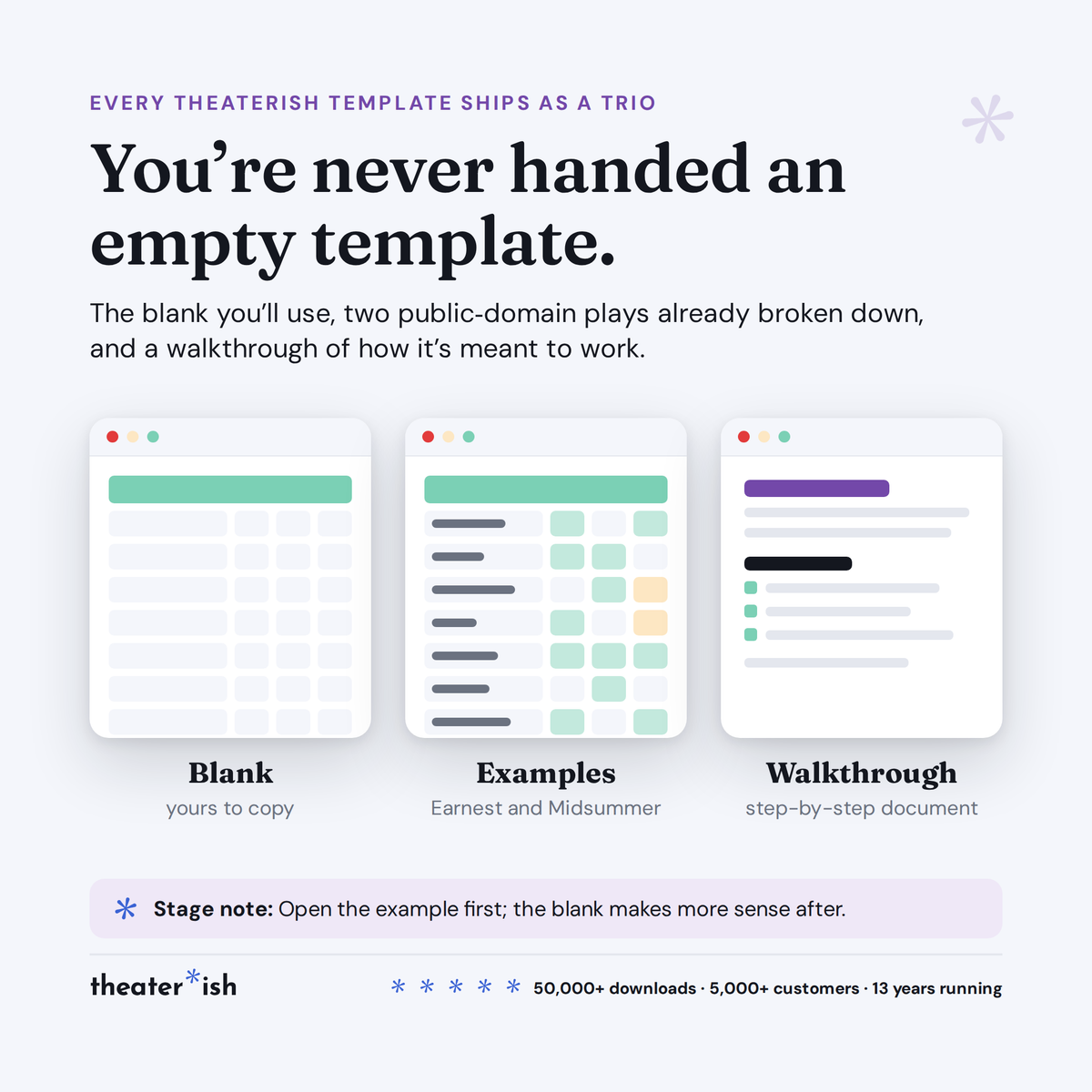
Every product is a trio.
The blank template
Clean and ready to fill in for your production this week.
A filled-in example
A real one, from an actual show — so you can see what done looks like.
A walkthrough
A short guided tour of the tool in use, start to finish.
What buyers say
Reviewed by people who've run the show.
“Set opening night once and every deadline fell into place. I stopped rebuilding this from scratch every season.”
“Handed it to a first-time SM and they ran with it — no training call needed.”
“The walkthrough answered the questions I didn't know I had. Worth it for that alone.”
Can't pick just one?
Bundle & Save
Mix and match any templates below, unlock an instant discount, and get everything you need in one go.